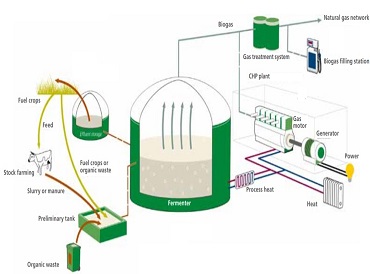
We offer turnkey electrification and automation solutions for biogas technology solutions that have become popular in recent years in waste management. The efficiency of a biogas plant is basically expressed in annual operating hours.
The existence of naturally produced biogas has been known since the 17th century; However, studies on the construction of biogas systems and facilities in the technical sense start with the Industry 2.0 revolution after the second half of the 19th century. One of the oldest biogas systems is septic tanks that have been used for wastewater treatment since the late 19th century and used on isolated properties without a sewage system. In these early period facilities, biogas is not collected and used, since the results related to insulation are aimed more. Construction of biogas plants for wastewater treatment begins in the 1920s in Denmark. In the samples of that period, biogas was originally used to heat the digester tank of the facility. The aim was not to generate energy, but to decompose organic matter in the wastewater, thus reducing and balancing the sludge, which is a product of the treatment process. Until the 1950s, biogas technology slowed to a halt; because the cost of fossil fuels was much cheaper. With the petroleum crisis in 1973, the Danish government started a research and development program to test and build different types of biogas plants using animal manure for alternative energy sources. Since then, the total number of biogas facilities has reached twenty thousand worldwide, especially with the increasing number in recent years, and the installed capacity has reached the level of 1 GW. biogas plants in Turkey is expected to increase in the following years the number is up to about a hundred. Biogas plants play a key role in increasing employment, especially in rural areas. It is also a very important argument for emission sales in the carbon (emission swap) exchange, which was created in accordance with the Kyoto protocol. As in small HEPP projects, we estimate that the number of facilities will increase in the near future.